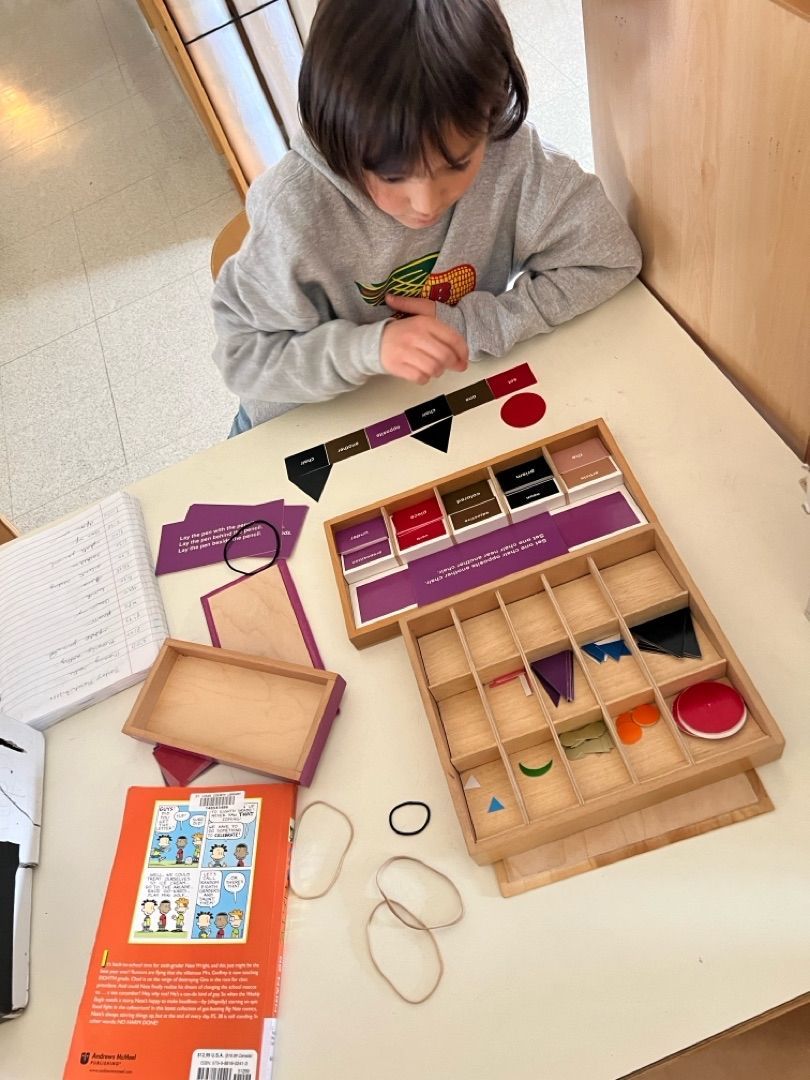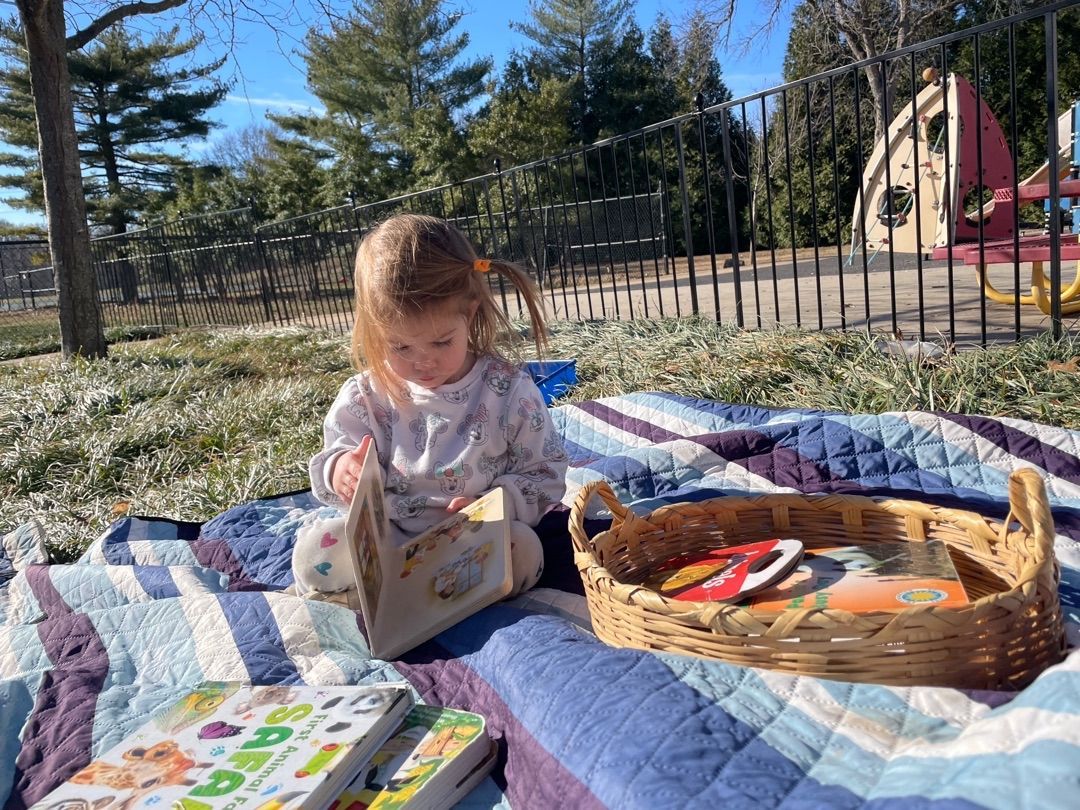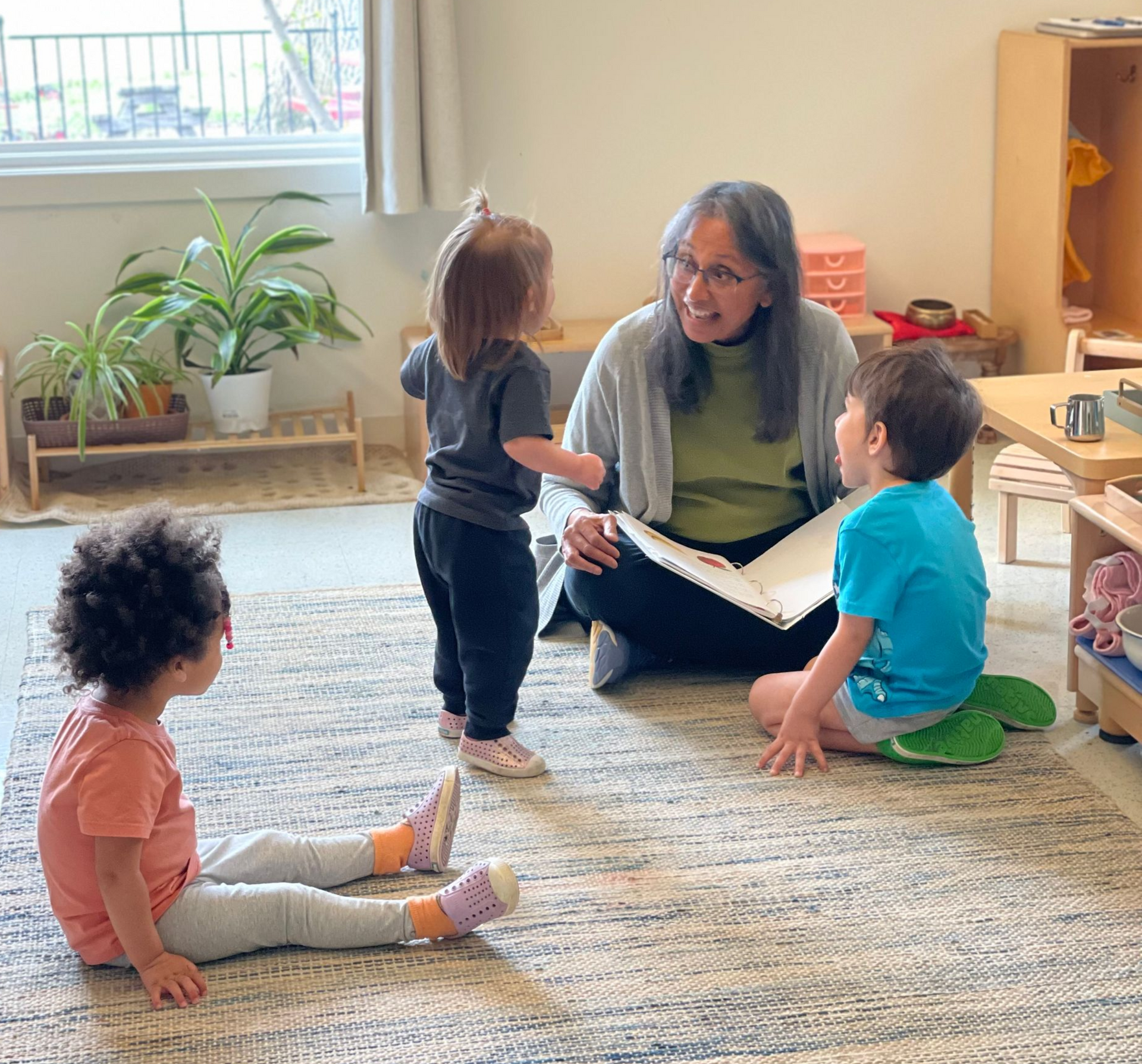

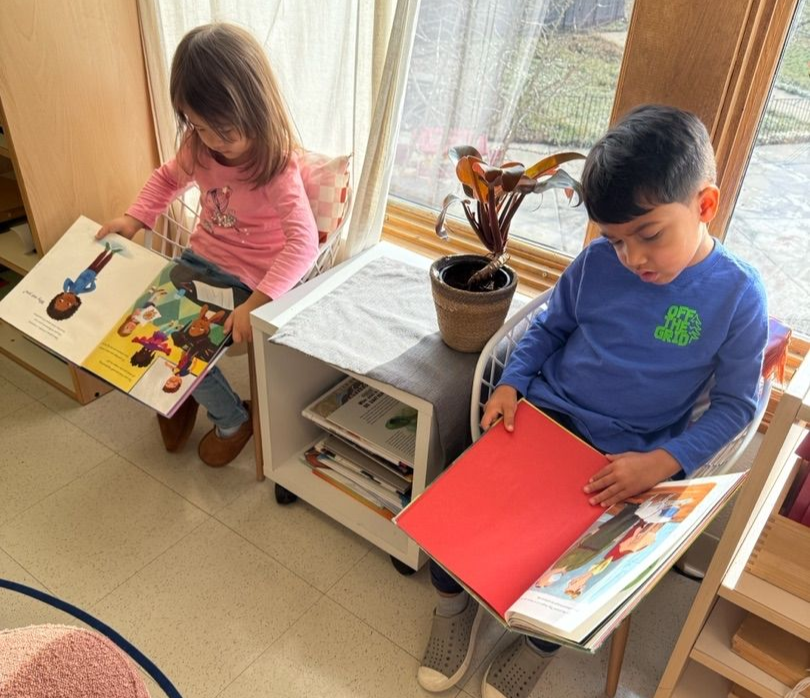
Literacy development at Chesterfield Montessori School doesn't look like a traditional reading lesson — and that's by design. Our Guides focus on letter sounds, not letter names, and children are immersed in language-rich environments from their very first days in the Toddler and Primary classrooms. The reading curriculum in Primary is intentionally non-sequential: children don't even realize at first that they are learning to read. Instead, they are surrounded by everything they need to acquire literacy in a way that makes sense to them, supported by an attentive, trained Guide who follows their individual progress through careful observation.
The Building Blocks: Key Materials in the CMS Primary Classrooms (& Why They Matter)
Three cornerstone materials lay the foundation for reading and writing at CMS:
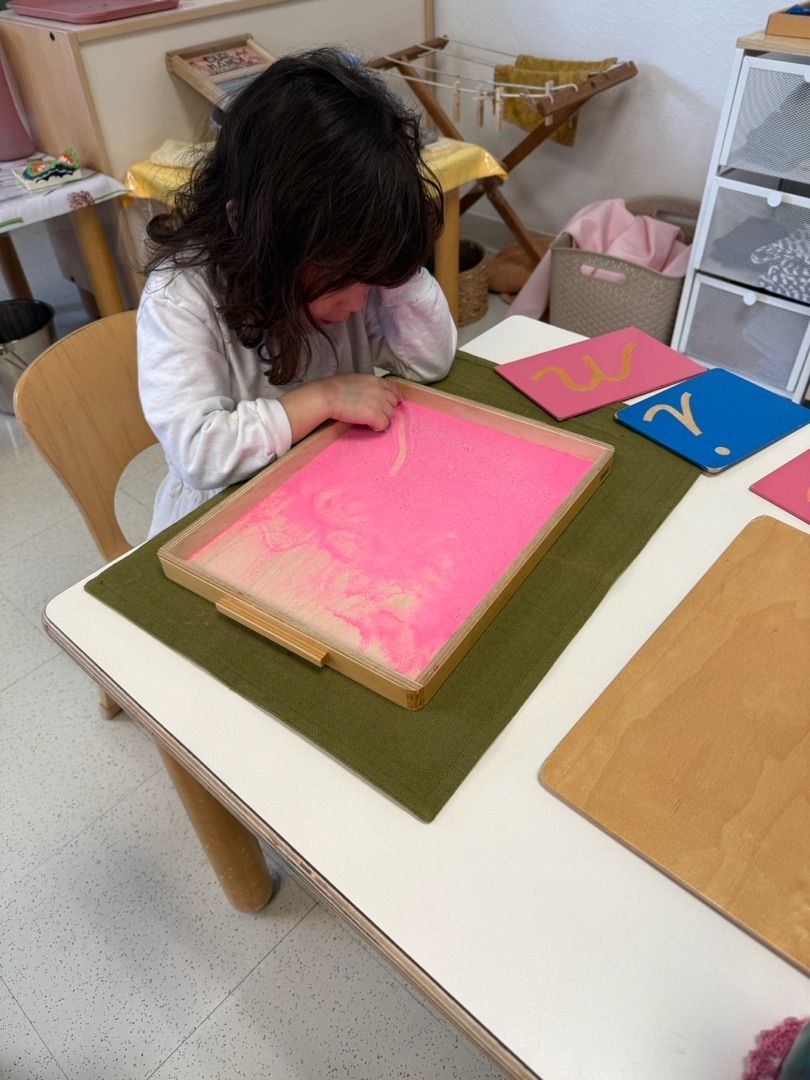
- Sandpaper Letters build the critical sound-to-symbol connection through a multi-sensory experience — children see, hear, and feel each letter sound as they trace it, preparing both their hand and their mind for writing and reading.
- Metal Insets are a deceptively simple but profoundly important Primary material. Children use a set of geometric metal frames and insets — along with colored pencils — to trace and fill in shapes with careful, controlled strokes. This work systematically develops the fine motor control, pencil grip, hand-eye coordination, and the precise muscle strength needed for fluid handwriting. Long before a child ever picks up a pencil to write a letter, the Metal Insets are quietly building the hand that will do that writing.
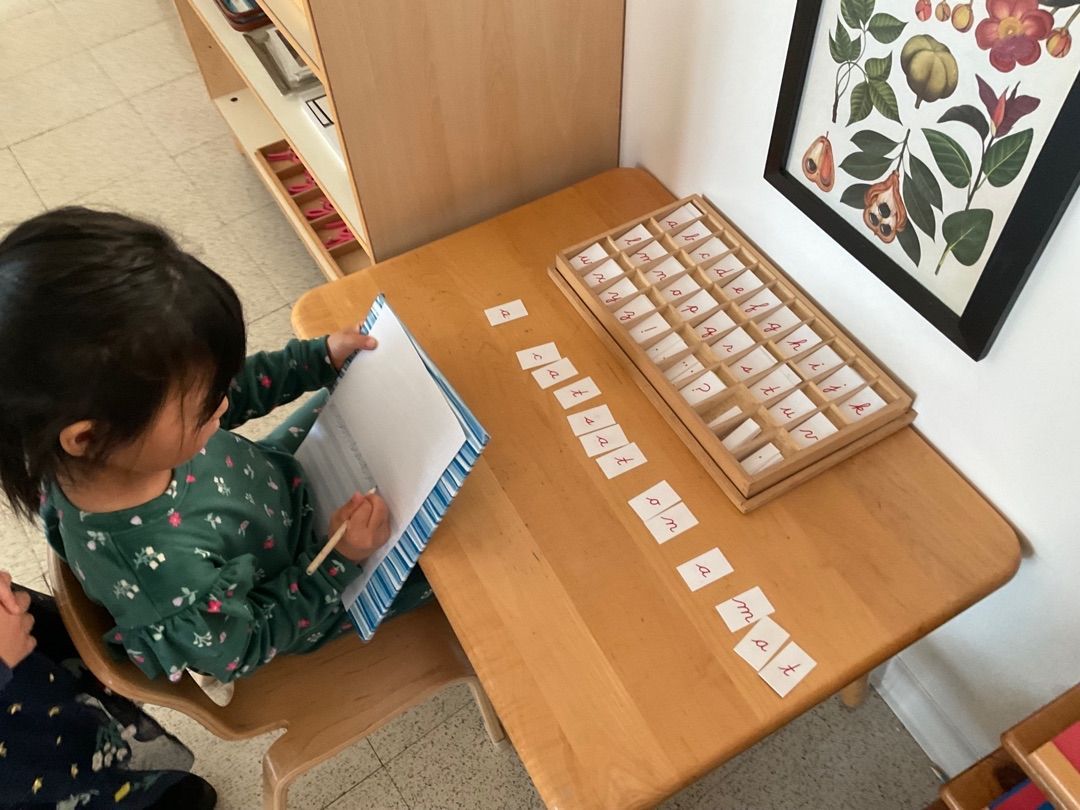
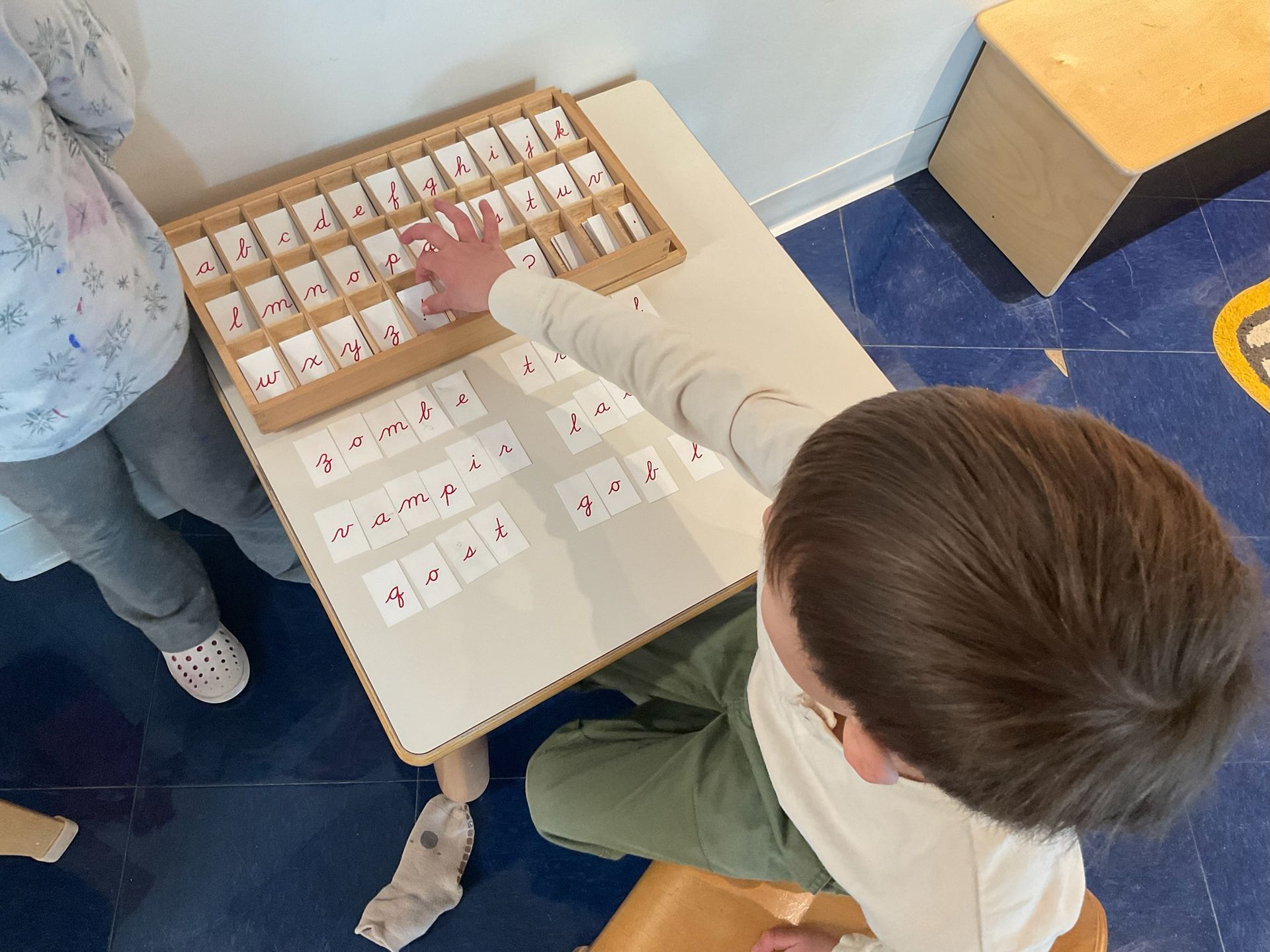
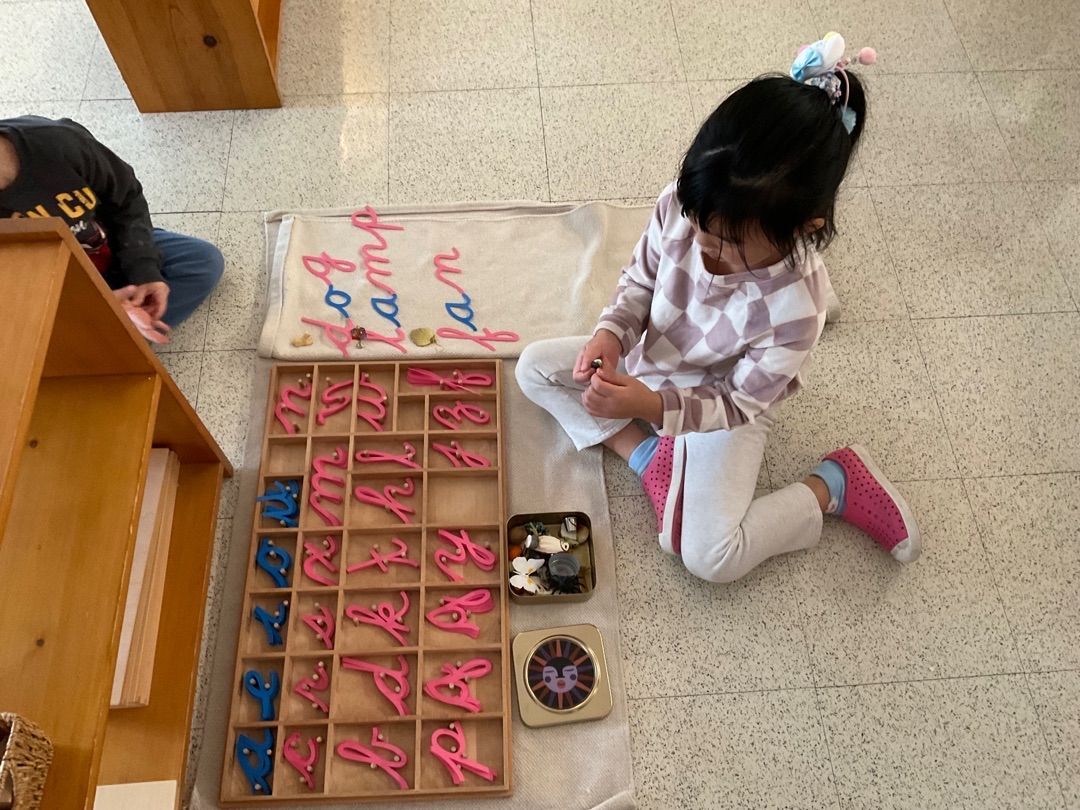
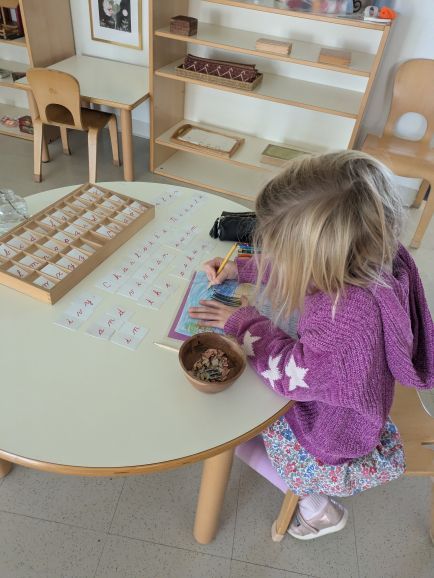
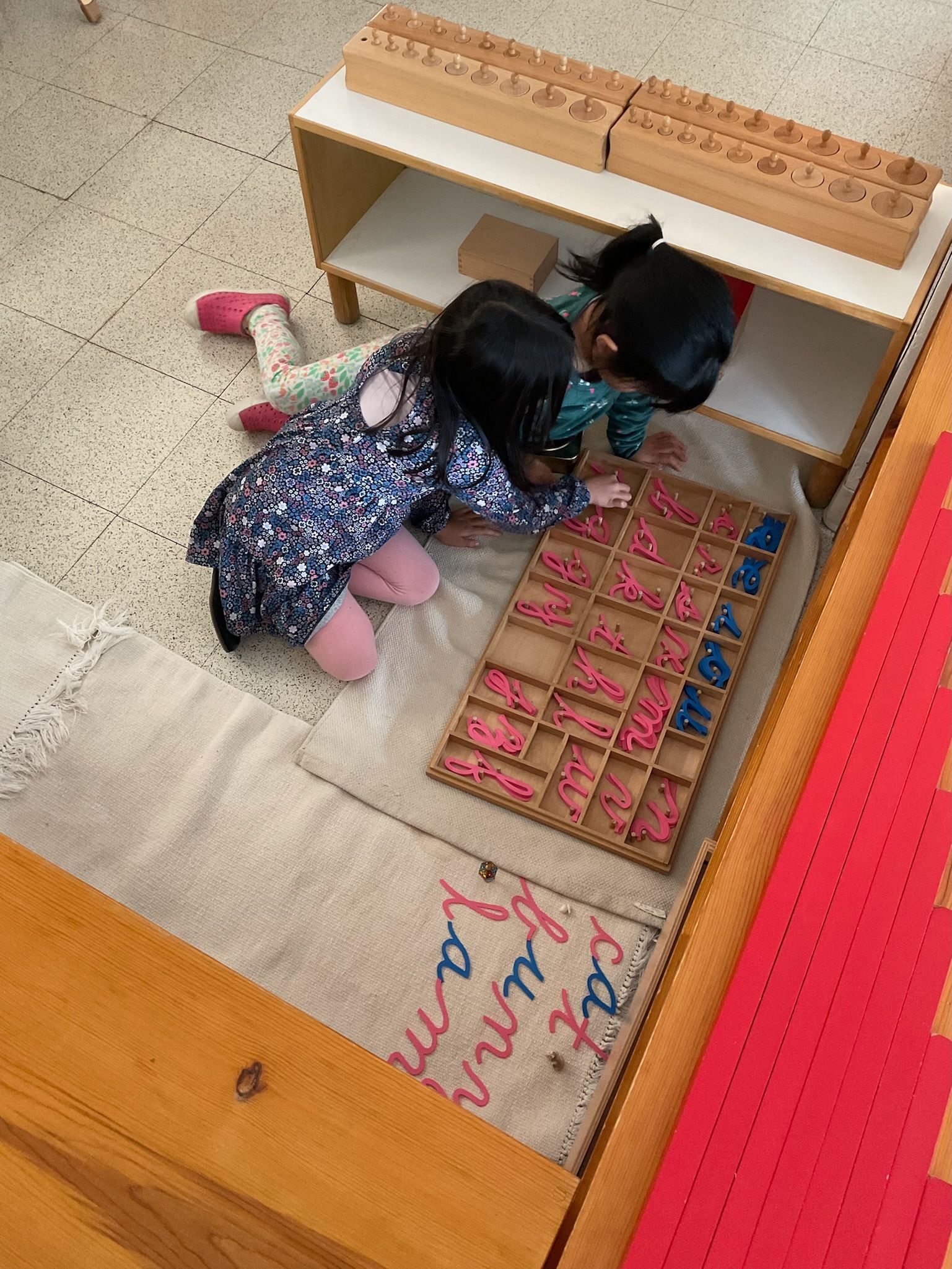
- The Moveable Alphabet gives children the tools to express themselves phonetically, building words, then sentences, then stories — long before they are formally "reading." They later practice writing what they've composed, deepening their understanding.
These materials reflect what modern neuroscience confirms: hands-on, self-generated letter practice activates a unique "reading circuit" in the brain that typing and tracing alone simply cannot replicate.
Why We Teach Cursive First
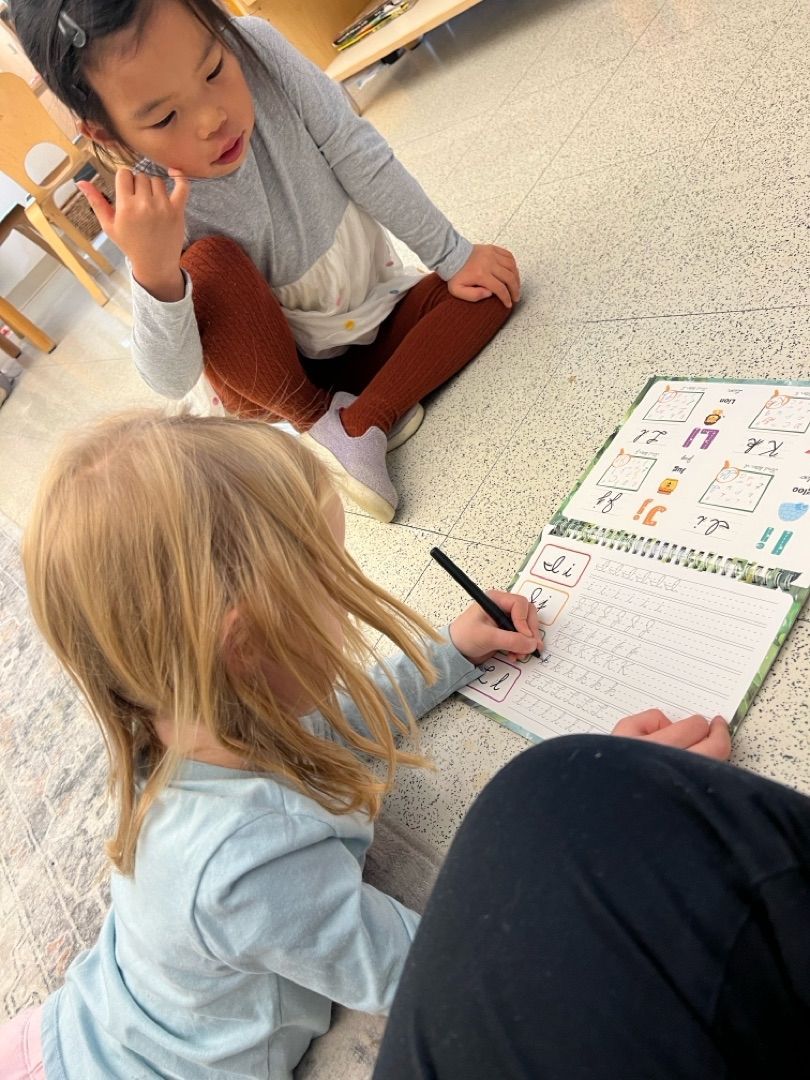
One of the most common questions we hear from families is: Why cursive? The answer is rooted in brain science. Cursive handwriting activates synchronized brain activity in regions critical for memory, language, and coordination — regions that print writing and keyboarding engage differently. Research published in Frontiers in Psychology found that cursive primes the brain for learning by synchronizing theta-range brain waves, creating optimal conditions for absorbing and retaining new information. Critically, cursive is far easier to acquire when introduced early; children who don't learn it young are unlikely to pick it up later. Most traditional schools hand children a Chromebook in Kindergarten or First Grade, bypassing this important window of brain development entirely. (Note: Children at CMS do learn keyboarding later—in Upper Elementary, using an old-school typewriter. This method makes them better keyboarders and also avoids unnecessary screen exposure. Reach out if you're curious how we slowly incorporate tech into the children's experience beginning in Upper El, and how our alumni fare in tech heavy fields!).
Phonological Awareness: The Umbrella
Phonological awareness is the broad skill that sits above all early literacy work — and it encompasses much more than just letter sounds. At CMS Language and Literacy program supplements the holistic reading approach already in place in the classrooms with each of these components:
- Words in sentences
- Syllables
- Rhyme & alliteration
- Onset and rime
- Phonemic awareness
- Isolation, blending, and segmenting
- Addition, deletion, and substitution
The Language & Literacy Program
The Language and Literacy program at CMS supports children in late Primary through Elementary as needed, through multiple avenues including Primary Phonics, Intervention support, Locked In for Language, Latin, and Book Club. Each lesson is guided by a continuous cycle of learning — Observe → Assess → Document — ensuring every child receives what they need. Because every child's path to literacy is unique, differentiation isn't an afterthought: it happens on the fly, with each lesson adapted in real time to meet the child in front of them.
In Kindergarten, children have opportunities for extra phonetic work with our Language & Literacy Specialist. In Elementary, students are regularly assessed for phonetic recognition, reading and writing fluency, and comprehension, with individual or small-group lessons provided as needed.
What Can You Do at Home?
Families play a powerful role in literacy development! Here are a few simple ways to reinforce the work happening at school:
- Keep it Fun and Low Pressure — let reading at home be about enjoyment
- Let Your Child See You Reading for Enjoyment (books and periodicals—not just online)
- Practice letter sounds — not letter names (say "mmm," not "em")
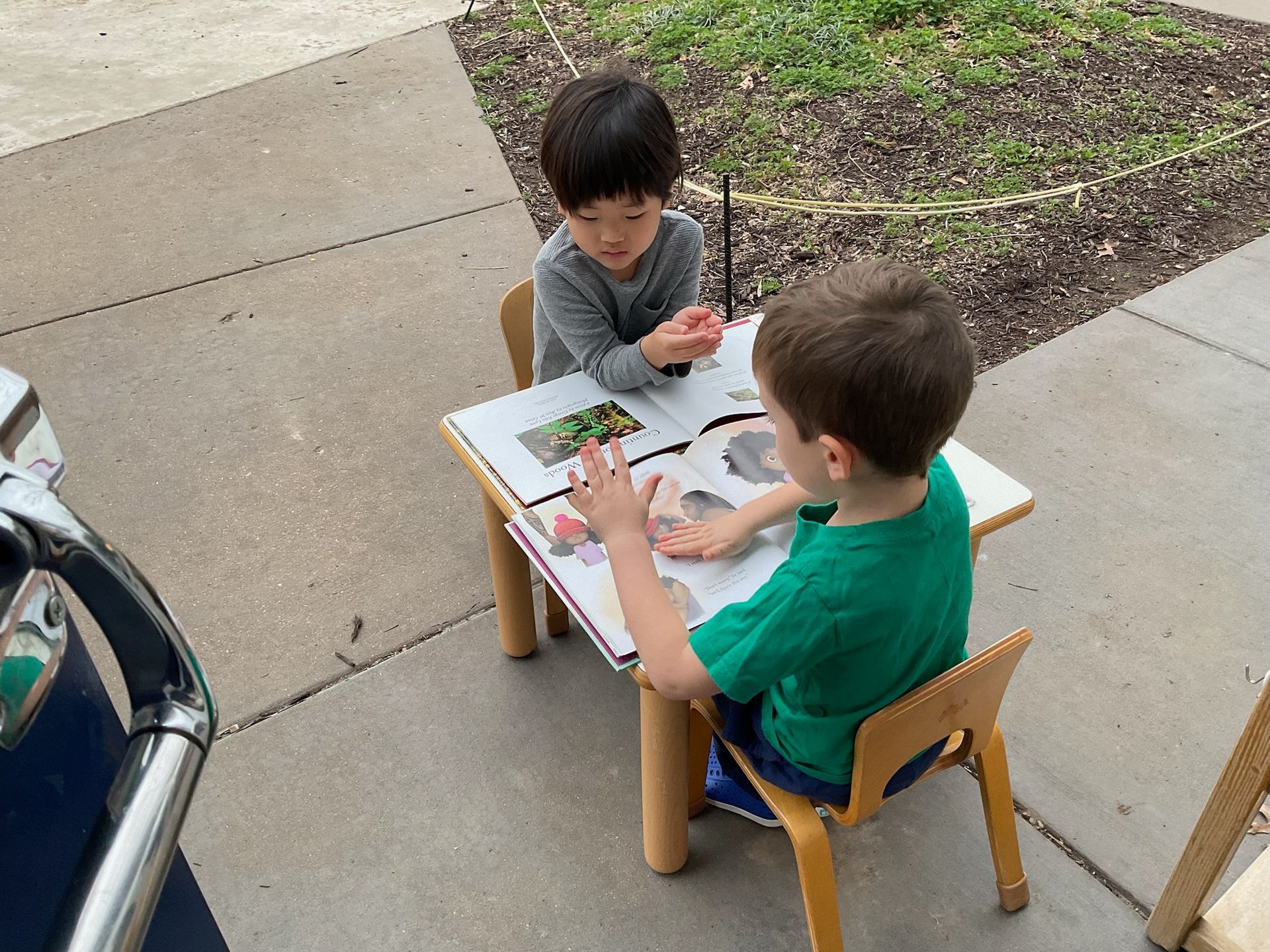
- Partner read together daily, even just for a few minutes
- Read books and poems together as a family even after they become fluent readers
- Check out BOB Books or early readers for accessible, confidence-building reading practice
- If your child’s guide or Ms. Marlena is suggesting additional work at home on reading and writing:
- Practice cursive handwriting at the level of your child’s interest and enthusiasm — tracing or copying simple words is a great start
- Learn sight words using flash cards (start with high-frequency words like the, and, is)
For more ideas on building a literacy-rich home, visit our blog: 7 Tips to Turn Your House into a Reading Home